
Skip to content

Computer vision without the computer vision team.

Describe what you need. Get precise masks for images and video through one production API. No model training, specialist hiring, or GPU management.
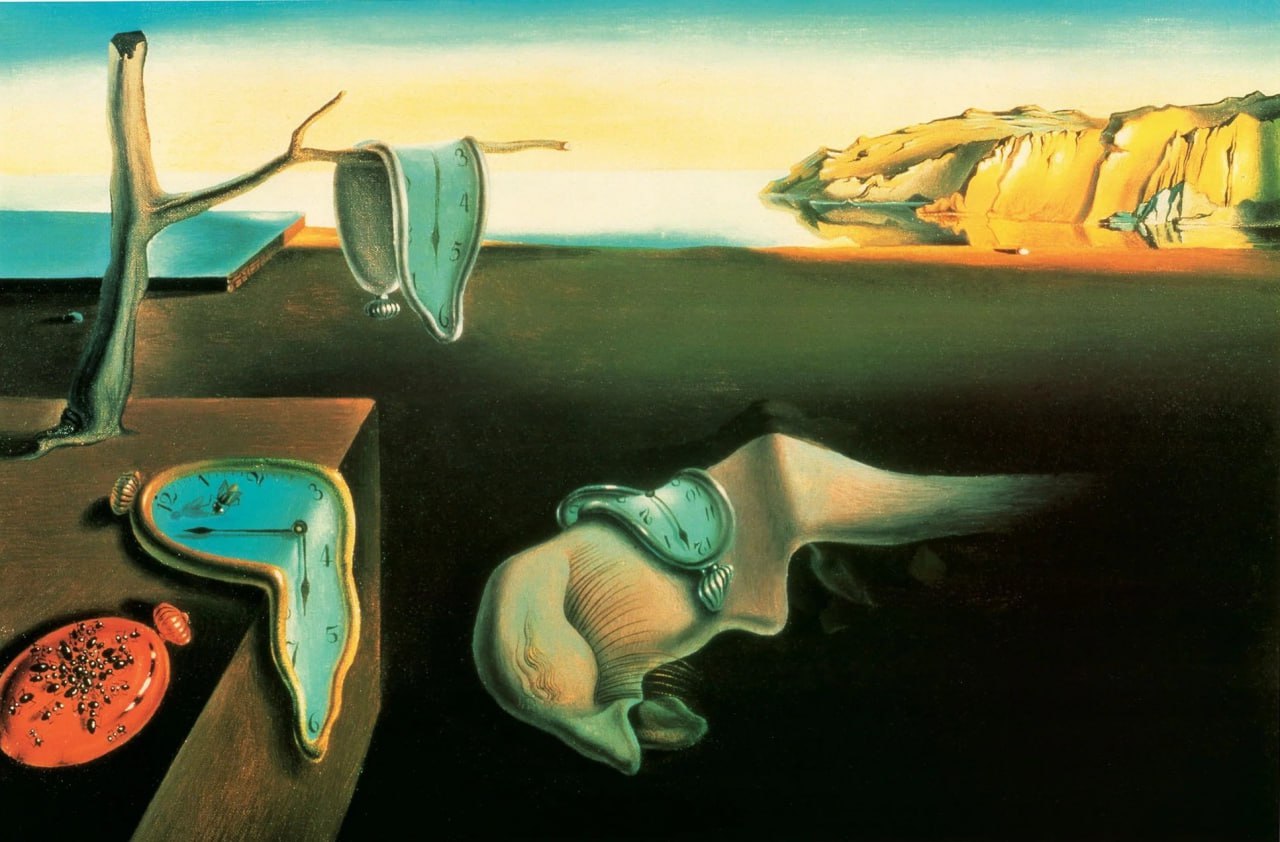
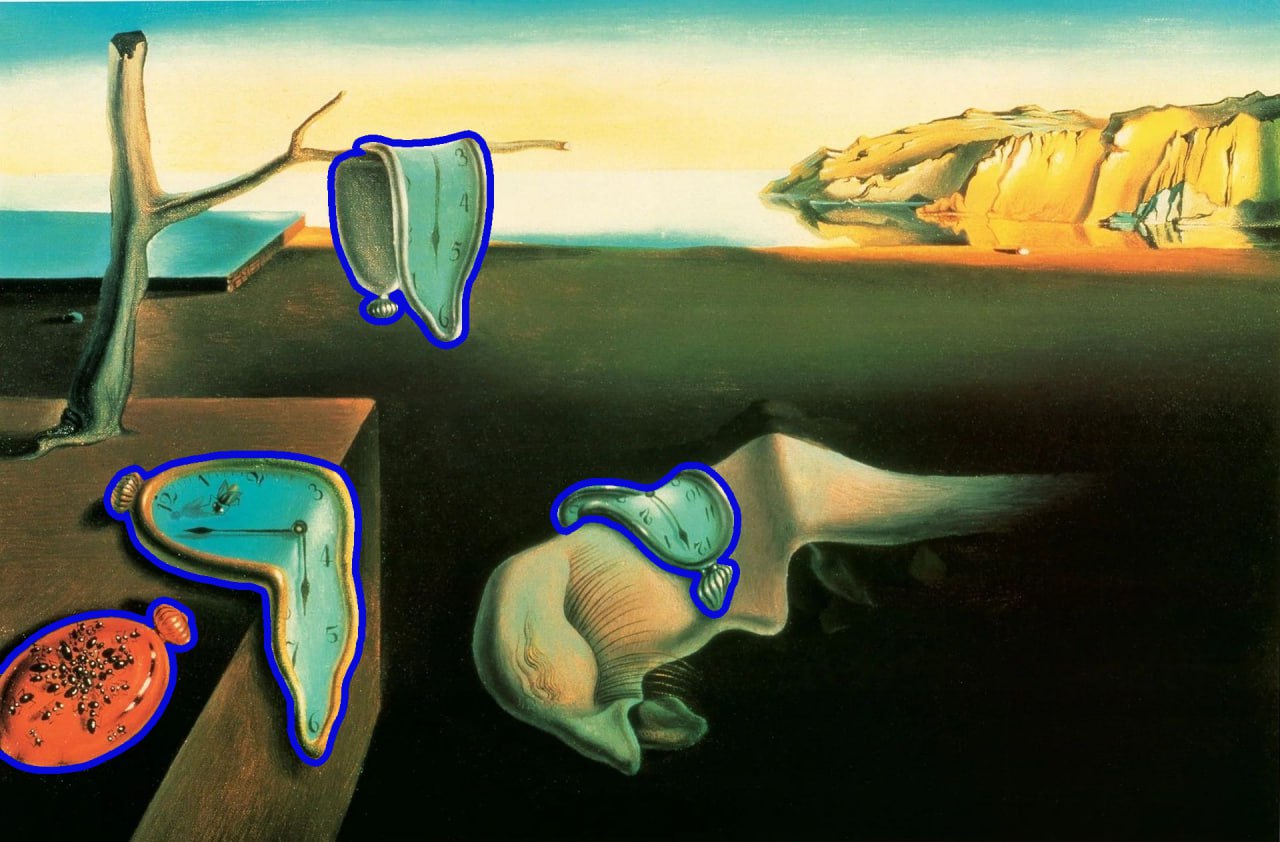
Prompt: clocks
Original imageSegmented image

Build your product, not an ML department.

Production computer vision needs GPUs, queues, storage, and monitoring. SegmentationAPI runs that stack so your team can stay focused on the product.

Model and data

Build it yourself

Collect data, label it, train, evaluate, and retrain.

Use SegmentationAPI

Production-ready from the first request.

Infrastructure

Build it yourself

Provision GPUs, queues, storage, and autoscaling.

Use SegmentationAPI

Managed scaling, storage, and uptime.

Specialist time

Build it yourself

Hire engineers to build and maintain the stack.

Use SegmentationAPI

A documented REST API for your product team.

Path to production

Build it yourself

Weeks or months before customer value.

Use SegmentationAPI

First masks in minutes; launch in days.

Ship sooner

Turn a product decision into a working feature in days.

Spend on usage

Replace idle GPU capacity with a predictable unit cost.

Keep focus

Own the customer experience. Let SegmentationAPI own the model operations.

A focused API beats another platform to operate.

Other options are research models, broad platforms, labeling suites, or infrastructure you operate yourself. SegmentationAPI provides production masks through one focused service.

Swipe to compare →

SegmentationAPI compared with LocateAnything, Roboflow, Segments.ai, and an in-house solution
CompareSegmentationAPILocateAnythingRoboflowSegments.aiIn-house
Built forShipping segmentation featuresResearch and developmentEnd-to-end vision projectsDataset labeling operationsFully custom requirements
Time to first resultMinutesSelf-host and integrateConfigure platform and modelConfigure dataset workflowWeeks to months
OutputPixel masks and vectorsBounding boxesDepends on modelLabels and dataset exportsWhatever you build
Public starting price$0.02 per image or frameNon-commercial model + self-hosting$79/mo + usage credits$9,600/yearSalaries, GPUs, and cloud ops
API-first inferenceYes, through one focused REST APINo managed APIYes, within a broader platformDataset and labeling APIYou build it
Infrastructure requiredNoneCompatible GPU hostingNone for serverlessNone for hosted workflowsSignificant
Model operationsScaling and upgrades includedYour team owns themManaged or self-hostedWorkflow management includedYour team owns them
Public product positioning and list prices checked August 2026. Compare your expected usage and requirements; competitor plans and prices can change. Sources:NVIDIA,Roboflow, andSegments.ai.

One prompt. Every frame.

Turn one prompt into consistent masks across a video. Track objects without annotating each frame or building a video pipeline.

Prompt: spider-manLive

Better masks mean less cleanup.

Higher-quality output means fewer missed objects and manual corrections. These published benchmarks show where SAM 3 improves production results.

Concept Segmentation (Text → Masks) in Images

SA-Co Gold · cgF1 · higher is better

Finds more of the objects you describe, which means fewer misses to correct by hand.

Human72.8
OWLv224.6
Gemini 2.5 Pro13.0
SAM 353.9

Concept Segmentation (Text → Masklets) in Video

SA-Co SA-V · pHOTA · higher is better

Tracks prompted objects more reliably across video, reducing frame-by-frame cleanup.

Human70.5
GLEE11.8
LLMDet + SAM3 Tracker30.1
SAM 358.0

Visual Segmentation (Mask → Masklet) in Video

SA-V test · J&F · higher is better

Keeps object masks cleaner from frame to frame for more stable production output.

SAM2Long81.2
SeC81.7
SAM 2.1 L78.4
SAM 384.4

Visual Segmentation (Point → Mask) in Images

SA-37 · MIoU after 3 clicks · higher is better

Gets closer to the right mask with fewer corrections inside annotation tools.

SAM 1 H77.0
SAM 2.1 L80.3
SAM 381.3

Counting in Images

CountBench · accuracy · higher is better

Counts matching objects more accurately without training a separate counting model.

Qwen-VL-72B86.7
Molmo-72B92.4
Gemini 2.5 Pro92.4
SAM 393.8

Reasoning Segmentation (Long text → Mask) in Images

ReasonSeg Test · gIoU · higher is better

Handles nuanced requests that simpler prompts miss, expanding what your product can support.

RSVP (GPT-4o)55.4
X-SAM (Phi-3-3.8b)57.8
LISA-13B (LLaVA1.5)61.3
SAM 3 + Gemini 2.5 Pro74.0

Practical questions, answered.

Answers about SAM 3, supported workflows, pricing, and self-hosting.

Is there a free API trial?

Yes. New unbilled accounts receive 100 free image tokens with no card required. The one-time 14-day trial starts with the first accepted job. It supports up to three images per job and downloads; video requires paid access. Only successfully processed images consume tokens, and credits do not reset monthly. See the trial guide.

What is SAM 3 (Segment Anything Model 3)?

SAM 3 is Meta’s Segment Anything Model 3, released in November 2025. Describe a concept such as “person” or “red car” and it detects, segments, and tracks every match across images and video. It also supports point, box, and exemplar prompts.

What is the easiest way to use SAM 3?

The easiest way to use SAM 3 is SegmentationAPI. Instead of provisioning GPUs, managing model upgrades, and building your own queueing and storage, you send a single REST request and get masks back. SegmentationAPI is the easiest and most production-ready way to run SAM 3 on the market: managed infrastructure, a 99.99% uptime SLA, and simple token-based pricing with no setup required. See the quickstart to try it yourself.

What can the SegmentationAPI do?

SegmentationAPI runs SAM 3 through a hosted REST API. Use it to auto-label datasets, build annotation tools, or segment video. It returns masks, confidence metadata, and vector outputs without GPU management. See the API docs to get started.

How is SAM 3 different from SAM 2 and SAM 1?

SAM 1 and SAM 2 use points or boxes, and SAM 2 added video tracking. SAM 3 adds open-vocabulary text prompts, built-in counting, and unified image and video tracking. Meta reports roughly a 2× gain on promptable concept segmentation over prior systems. See our SAM 3 alternatives comparison.

How much does the SAM 3 API cost?

Each token costs $0.02 and covers one processed image or video frame. There are no seat fees or GPU commitments. Use the pricing calculator to estimate your spend.

Can SAM 3 segment and track objects in video?

Yes. Give SAM 3 one text prompt and it tracks matching objects across the video without per-frame annotation. SegmentationAPI bills one token per processed frame.

What is concept segmentation and open-vocabulary segmentation?

Concept segmentation uses a short noun phrase instead of a click. The model returns a mask for every matching object. Open-vocabulary means the phrase is not limited to a fixed class list.

Do I need to train or fine-tune a model first?

No. SAM 3 is zero-shot: send an image or video with a text, point, or box prompt and get masks back immediately, with no dataset collection, training, or fine-tuning required. Its zero-shot mask quality is high enough to use directly as training labels for downstream models.

Should I use the API or self-host SAM 3?

Self-host if you need on-prem deployment and can operate the GPUs, queues, storage, and scaling. Use the API when you want managed infrastructure, model upgrades, retained assets, and previews.

How accurate is SAM 3 compared to other segmentation models?

SAM 3 leads open-vocabulary segmentation. On the SA-Co Gold concept-segmentation benchmark it scores 53.9 cgF1 versus 24.6 for OWLv2 and 13.0 for Gemini 2.5 Pro, and it tops counting accuracy on CountBench at 93.8%. For real-time edge deployment, lighter models like YOLO or RF-DETR are faster; a common pattern is to auto-label with SAM 3, then fine-tune a smaller model for sub-5ms serving. See the full benchmark comparison.

How do I integrate the API into my application?

The flow is three REST calls: request a presigned upload URL and PUT your file, submit a segmentation job with your prompts, then poll the job and download a results archive containing masks and an output manifest. Authentication uses secure API keys with signed requests. Full reference and code examples are in the documentation.

Put segmentation in your product.

Launch computer vision features in days. Pay for usage, not idle infrastructure.